Long-Lasting Protection Built for Extreme Weather
Metal Roofing in Kalispell for roofs exposed to heavy snow loads and high winds
Flathead Valley Roofing installs metal roofing systems for homeowners and commercial property owners across Kalispell who need durable protection against snow accumulation, wind-driven rain, and fire risk. You'll see the difference in performance during winter months when standing seam panels shed snow cleanly, preventing ice dams and reducing structural stress. Metal systems are engineered to handle the weight and freeze-thaw cycles common in this region without the cracking or granule loss that shortens the life of other materials.
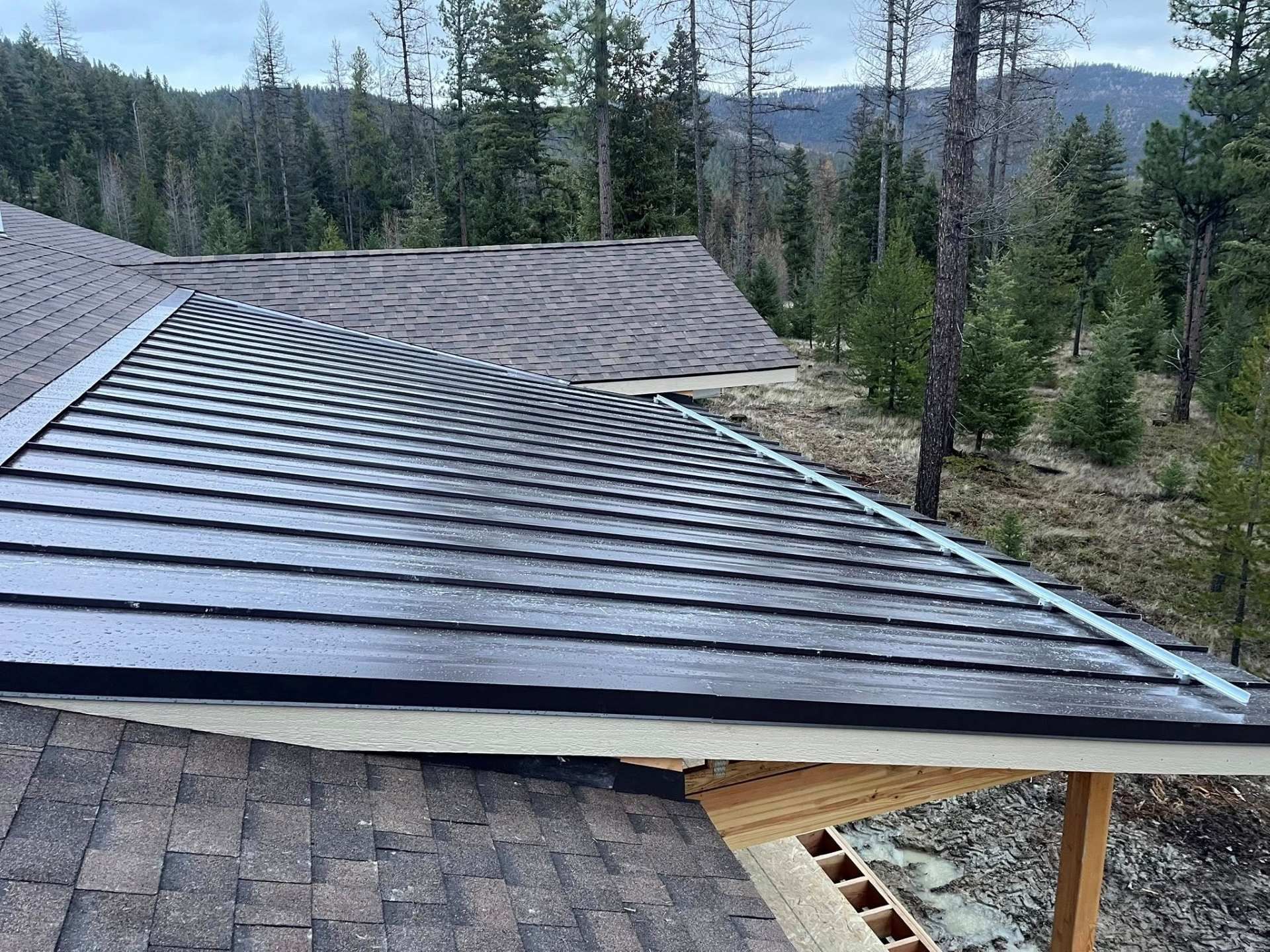
This type of roofing involves fastening interlocking panels directly to structural decking or over existing roofing substrates, depending on your building's condition and load capacity. We use concealed fastener systems on standing seam profiles to eliminate exposed screws that can back out or leak over time. Each panel runs vertically from ridge to eave, creating continuous lines that channel water and snow melt efficiently. Metal roofing resists wind uplift better than shingles, and its noncombustible surface provides a Class A fire rating, which matters in areas where wildfire smoke and embers travel long distances during dry summers.
If you're replacing a roof that requires frequent repairs or planning new construction that demands low maintenance, we can walk the site and discuss panel profiles, finishes, and attachment methods suited to your building.
You're investing in a system that typically lasts fifty years or more with minimal upkeep. We measure and fabricate panels to fit your roof's exact dimensions, then install them over synthetic underlayment that adds a secondary moisture barrier. Fasteners are placed in the panel's flat rather than the raised seam, or hidden entirely beneath overlapping edges, depending on the profile you choose. Ridge caps, eave trims, and valley flashings are all fabricated from matching material to maintain uniform appearance and weather resistance.
After installation, you'll notice that your roof stays clear of debris buildup because the smooth surface doesn't trap pine needles or fallen leaves. Snow slides off more readily than it does from textured shingles, reducing the need for manual removal and lowering the risk of sudden avalanches near entryways. Flathead Valley Roofing ensures that all penetrations, including vents and chimneys, are sealed with custom-formed boots and collars that prevent water entry at vulnerable transition points.
We do not install metal roofing over structures with inadequate ventilation or compromised decking. If your attic lacks proper airflow or if the existing sheeting shows rot or sagging, those issues must be corrected first. Metal panels amplify the sound of rain and hail more than shingles, though insulation and attic space typically reduce interior noise to acceptable levels. Color finishes are baked onto the metal and resist fading, but darker tones may show minor chalking after decades of UV exposure.
Questions About Metal Roofing in Kalispell
Homeowners often ask about installation timelines, material choices, and how metal roofing performs in the local climate.
What types of metal roofing panels do you install?
We install standing seam, corrugated, and ribbed panel systems in steel, aluminum, and occasionally copper, depending on your budget and aesthetic goals.
How does metal roofing handle snow accumulation?
The smooth surface and steep panel seams allow snow to slide off more easily than it does from shingles, reducing ice dam formation and lowering the load on your roof structure during heavy winters.
Snow breaks (also known as snow guards) are an important feature on metal roofing systems, especially in climates like Montana where heavy snowfall is common. Their purpose is to prevent large sheets of snow and ice from sliding off the roof all at once, which can be dangerous to people, landscaping, and structures below. Snow breaks are typically installed in strategic rows along the roof, most commonly above entryways, walkways, driveways, and areas where foot traffic or equipment is present. When installed correctly, snow breaks help control snow melt in a safe, gradual manner while protecting both the property and those around it.
When should I replace my existing roof with metal?
You should consider replacement when your current roof nears the end of its service life, especially if you're facing frequent leak repairs or want to eliminate ongoing maintenance.
Why does metal roofing cost more upfront than shingles?
Metal materials and the specialized labor required for cutting, forming, and sealing panels increase initial costs, but the extended lifespan and reduced maintenance offset that investment over time.
How long does a metal roof installation take?
Metal roof installation timelines can vary depending on a few key factors, especially here in Kalispell, Montana. Weather plays a big role—rain, wind, or unexpected temperature swings can slow progress and impact scheduling. In addition, the complexity of the roof itself—such as steep pitches, multiple valleys, dormers, or detailed flashing work—can extend the timeline. As a general guideline, most metal roof installations take about one to two weeks from start to finish, allowing for proper installation, weather delays, and ensuring everything is completed to a high standard.
Flathead Valley Roofing provides detailed estimates that include material specifications, installation steps, and projected timelines. If your building requires a roof that will outlast multiple shingle replacements and handle harsh winters without constant attention, reach out to discuss which metal roofing system fits your needs.